
Gum pain when flossing crown Seoul: foreign patient guide
Gum pain when flossing crown Seoul patients experience can come from inflamed tissue, food packed between teeth, floss snapping through a tight contact, a rough or overhanging margin, recession, decay, or another local condition. Flossing technique matters, but repeated pain or bleeding beside one crown should not be explained by technique alone. Idea Dental Clinic is near HUFS Station Exit 5 in Dongdaemun-gu. An in-person exam can check the crown, neighboring tooth, gum pocket, contact, cleanability, and imaging needs before treatment is chosen.
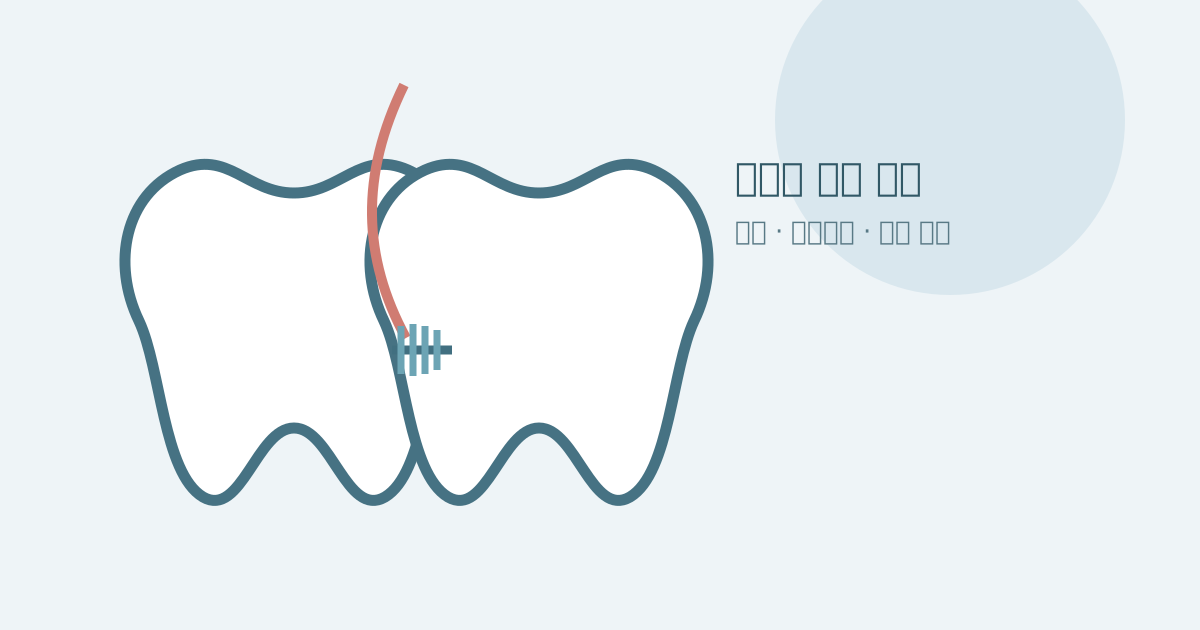
Gum pain when flossing crown Seoul: notice exactly where it hurts
For gum pain when flossing crown Seoul evaluation, note whether discomfort occurs as floss passes the contact, when it reaches the gumline, or when it is pulled back out. Does floss snap suddenly, shred against an edge, pass too loosely, or return with blood, odor, or debris? These details can help distinguish contact shape and restoration surface from generalized gum inflammation.
One painful crown area can have several contributing factors. Plaque and trapped food may inflame the gum. A contact that is too tight can make floss difficult, while an open contact can let food pack into the space. A rough margin, excess cement, crown contour, gum recession, cavity on the crowned or neighboring tooth, or a localized periodontal pocket may also be relevant.
Bleeding does not prove that the crown must be replaced, and the absence of pain does not prove that the margin is healthy. The first goal is to find the tissue or surface responsible and determine whether the area can be cleaned. Do not force floss repeatedly through severe resistance or use sharp tools under the crown edge before the visit.
Floss hurts around crown Dongdaemun: prepare useful observations
When floss hurts around crown Dongdaemun patients can prepare by recording which side of the crown is affected, how long the crown has been present, and whether the problem started immediately or developed later. Mention recent cementation, cleaning, food impaction, a chipped surface, a change in bite, or an episode when floss became stuck.
Compare the area with other teeth without repeatedly irritating it. Note whether ordinary brushing also causes bleeding, whether the gum is swollen, and whether cold, sweets, biting, or tapping triggers the tooth. A bad taste, pus, persistent odor, crown movement, or pain around a root-canal-treated tooth changes the questions the dentist may need to investigate.
- Identify whether floss catches above, at, or below the contact.
- Note snapping, shredding, looseness, bleeding, odor, or food debris.
- Record crown age, recent treatment, and prior root canal care.
- Report cold, sweet, biting, spontaneous, or night pain separately.
- Bring available X-rays and your Seoul follow-up schedule.
Crown contact check near HUFS: examination and imaging
A crown contact check near HUFS may use floss to assess resistance and whether the strand frays. The dentist can inspect the crown contour, margin, gum redness, plaque retention, recession, and the neighboring tooth. Gentle probing may identify bleeding, pocket depth, tenderness, or an area where food is being pushed below the contact.
Magnification, air drying, and dental instruments can help locate a rough edge or excess material. Bite marking may be relevant when chewing pushes food into the space or the crown receives unusual force. The crown should also be checked for movement; a loose restoration needs a different evaluation from a stable crown with inflamed gum tissue.
Selected X-rays may show bone levels, some open or overhanging margins, recurrent decay, neighboring tooth decay, and root findings. Dense crown material and image angle can hide areas, and X-rays do not show every surface defect or cement remnant. Clinical and imaging findings should be combined before recommending polishing, cleaning, repair, removal, or replacement.
| Clue | What may be checked | Possible discussion |
|---|---|---|
| Floss snaps through tightly | Contact strength, seating, contour | Technique, adjustment if accessible, or restorative review |
| Floss is loose and food packs | Open contact, tooth movement, gum and bite | Cleaning plan, monitoring, repair or remake evaluation |
| Floss shreds at one point | Rough surface, cement, margin, decay | Professional cleanup, polish, or further treatment |
| Bleeding with pocketing or swelling | Plaque, periodontal support, margin and root | Gum care and source-based treatment |
Bleeding beside crown Korea: home care without injury
For bleeding beside crown Korea patients should continue gentle plaque control rather than abandoning the area, unless floss is stuck or causes sharp injury. Slide floss through the contact with control, curve it against each tooth, and move it gently below the gum edge without sawing into tissue. If the contact is too tight for safe passage, stop forcing it and ask the clinic to examine the space.
An interdental brush should fit without being pushed under pressure. A brush that is too large can traumatize the gum, while one that is too small may not clean the intended surface. Bridges and connected crowns may need threaders or another device, but the crown design and available space should guide the choice.
Do not place aspirin, alcohol, peroxide concentrate, glue, or sharp picks against the painful gum. Mouth rinse may support some care plans but does not correct decay, a rough crown edge, an open contact, or excess cement. If swelling, pus, fever, worsening pain, or crown movement develops, arrange prompt assessment.
Foreign patient crown margin exam Seoul: treatment decisions
A foreign patient crown margin exam Seoul may lead to professional cleaning, home-care adjustment, cement removal, polishing an accessible rough area, gum treatment, cavity treatment, contact correction, crown repair, monitoring, or crown replacement. The least invasive option that addresses the identified source can be discussed, but a smaller procedure should not be promised when hidden decay or poor fit is suspected.
Replacement is not required solely because a crown is old or the gum bled once. It becomes a consideration when the crown cannot be cleaned, the margin is defective, decay is present, the contact repeatedly traps food, the contour injures tissue, the crown is loose or fractured, or supporting tooth treatment requires removal. If removal is planned, ask what is known beforehand and what may only be confirmed underneath.
For short-stay patients, ask how many visits each option may need and whether gum healing or laboratory work affects timing. Share departure, school, and work dates before irreversible care. If treatment continues elsewhere, request available X-rays, tooth number, findings, crown status, and details of any temporary measure.
Clinic NAP, urgent signs, and Google Maps cue
Seek faster care when pain becomes spontaneous or severe, swelling spreads, pus or fever appears, the crown moves, the tooth fractures, or swallowing and mouth opening become difficult. Rapid facial swelling, breathing or swallowing difficulty, uncontrolled bleeding, or major trauma requires urgent local assessment. Do not keep testing a loose crown with floss.
Idea Dental Clinic is at 7F, The 305 Building, 13 Hwigyeong-ro, Dongdaemun-gu, Seoul, near HUFS Station Exit 5. The location may be convenient for international patients around Hankuk University of Foreign Studies, Imun-dong, Hoegi, Kyung Hee University, and Dongdaemun-gu. Open the Google Maps link before visiting and confirm appointment timing.
Bring symptom notes, the crown date if known, previous records, medication and allergy information, and your travel schedule. A gum pain when flossing crown Seoul guide can improve communication, but diagnosis requires direct examination of the crown, neighboring tooth, gum tissue, contact, bite, and clinically indicated imaging.
Before visiting a dental clinic in Seoul
Crown treatment planning depends on remaining tooth structure, cracks, previous root canal treatment, bite force, gum condition, and the material selected for the final restoration. For international patients, it is also helpful to prepare a short timeline: when the problem started, what triggers discomfort, which dental work was done before, and how long you plan to stay in Seoul.
Idea Dental Clinic is located near HUFS Station Exit 5 in Dongdaemun-gu, Seoul. The English articles on this site are written for people visiting from abroad, exchange students, English-speaking residents, and visitors who need practical dental information before an in-person exam. They do not replace a diagnosis, dental imaging, or consultation with a clinician.
If you are comparing several dental clinics in Seoul, focus on whether the first visit can answer the practical questions that affect your decision: what appears urgent, what imaging may be needed, whether the tooth or gum condition is stable enough for treatment, how many visits may be realistic, and what should be monitored if you leave Korea soon.
- Bring previous X-rays or treatment records if available.
- Write down current symptoms, medication history, and travel schedule.
- Tell the clinic about old crowns, inlays, implants, orthodontic treatment, or root canal treatment.
- Ask which issues are urgent and which can be monitored after diagnosis.
- Use the map link or phone number to confirm visit timing before coming to the clinic.
Planning a visit for gum pain when flossing crown Seoul
If you are preparing a visit for gum pain when flossing crown Seoul, it can help to write down related concerns such as floss hurts around crown Dongdaemun, crown contact check near HUFS, bleeding beside crown Korea, foreign patient crown margin exam Seoul before the appointment. Clear notes make it easier to discuss symptoms, previous dental work, and treatment timing.
Dental care is often local and situation-based. A patient may need a dentist near HUFS, a crown consultation in Seoul, inlay treatment in Dongdaemun, or prosthetic dental care in Korea, but the actual treatment plan still depends on an in-person oral exam, X-rays, gum evaluation, and bite assessment.
For English-speaking patients, a concise written note can reduce confusion during the appointment. Include the tooth or jaw area, the type of discomfort, when it started, what makes it worse, previous dental treatment, medication or allergy details, and the dates when you are available for follow-up. This helps connect search intent with a responsible clinical workflow.
Frequently asked questions
What can cause gum pain when flossing crown Seoul?
Possible causes include inflamed gum tissue, trapped food, a tight or open contact, a rough margin, excess cement, recession, decay, pocketing, or crown movement.
Should I keep flossing if floss hurts around crown Dongdaemun?
Use gentle controlled cleaning, but do not force floss through severe resistance or sharp pain. A persistent localized problem should be examined so technique and crown factors can be separated.
What happens during a crown contact check near HUFS?
The dentist may assess floss resistance, contact shape, margins, contour, gum bleeding and pockets, crown stability, bite, neighboring teeth, and selected X-rays.
Does bleeding beside crown Korea mean the crown must be replaced?
No. Cleaning, inflammation, cement, contact, contour, decay, and fit are checked first. Replacement depends on clinical findings and whether a smaller measure can address the source.
Where is Idea Dental Clinic for a foreign patient crown margin exam Seoul?
Idea Dental Clinic is near HUFS Station Exit 5 at 7F, The 305 Building, 13 Hwigyeong-ro, Dongdaemun-gu, Seoul. Open Google Maps before visiting.
This article provides general dental information. Diagnosis and treatment planning may change after an in-person oral exam, dental imaging, gum evaluation, and consultation with a clinician.